The January pay gap: how to make your last December pay last
By KiwiBudget Team ·
Getting paid early before Christmas feels great on the day. It feels a lot less great in the second week of January, when the fridge is empty, the rent's due and the next pay still hasn't landed.
That's the January pay gap. Some workplaces pay early before the break, and the public holidays land in the middle. So the last pay of the year often has to cover more days than usual, right when summer spending is at its peak. Here's how to plan for it now, while there's still time.
1. Find out your pay dates now
Don't guess. Ask your payroll person or check your payslips, and get four answers:
- When is my last pay before Christmas? Is it on the usual day, or early?
- Does it include holiday pay for days I'll be off?
- Is there a closedown, and how much of it is annual leave?
- When is my first pay in January?
Then count the days between your last pay and your next one. That's the number your plan is built on.
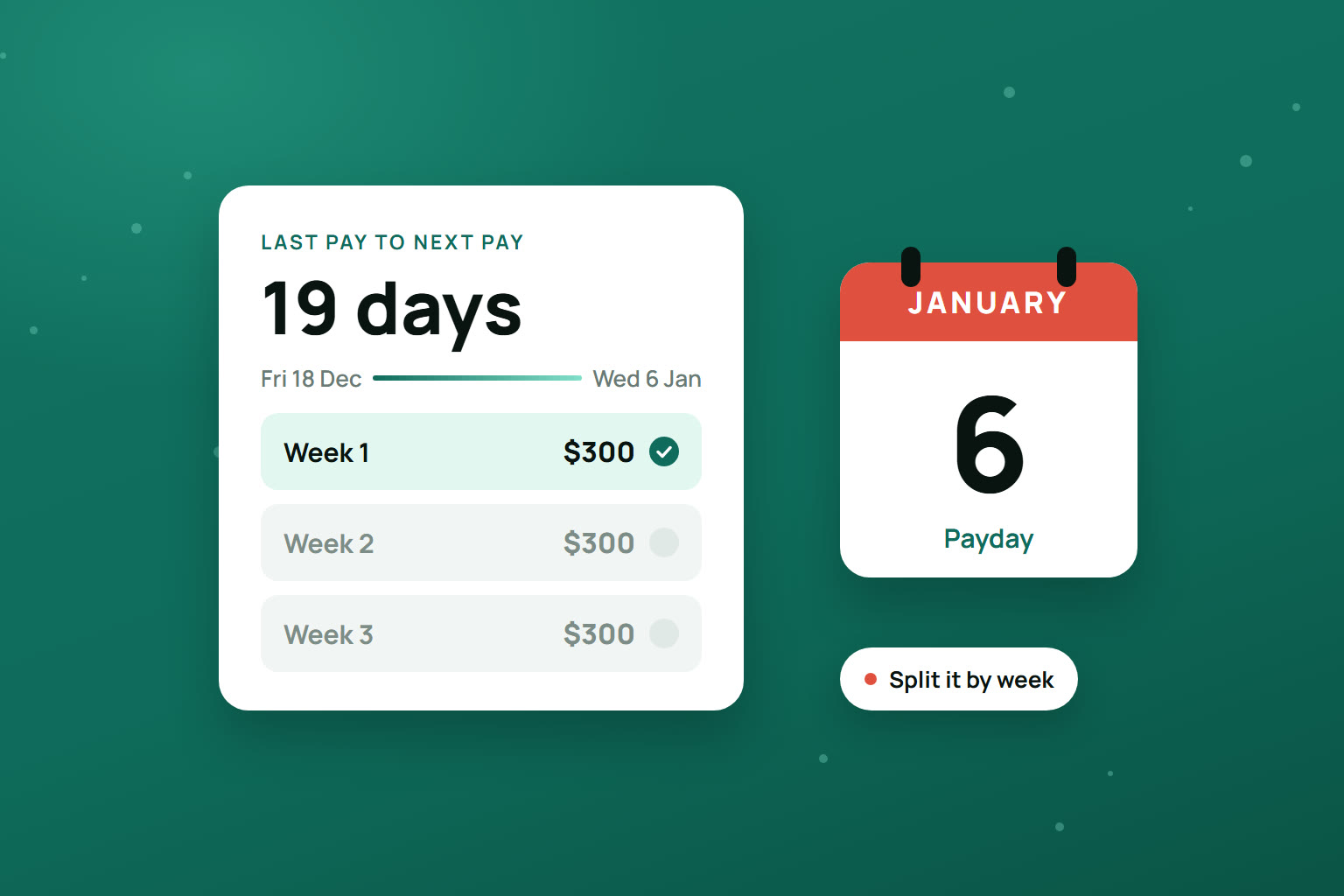
Example (made up): you're paid fortnightly on Wednesdays. Your usual payday would be Wednesday 23 December, but your work pays early on Friday 18 December. Your next pay is Wednesday 6 January. That's 19 days on one pay instead of 14.
2. This summer's public holidays
Here are the dates from Employment New Zealand:
- Christmas Day: Friday 25 December 2026
- Boxing Day: Saturday 26 December 2026, or Monday 28 December
- New Year's Day: Friday 1 January 2027
- Day after New Year's Day: Saturday 2 January 2027, or Monday 4 January
Two of those fall on a Saturday, so "Mondayisation" comes in. Employment New Zealand puts it simply: if you would have worked on the Saturday, the public holiday stays on that day. If you wouldn't have, it moves to the Monday. You get one or the other, not both. If your roster's all over the place, you and your employer need to agree in good faith on whether it's a day you'd otherwise work.
3. Holiday pay basics
The Holidays Act is still the law. A new Employment Leave Act passed this year, but MBIE says it doesn't come into force until 6 August 2028, and until then employers must follow the current Holidays Act rules. Here's what Employment New Zealand says about the bits that matter for the gap.
Public holidays you don't work. If it's a day you'd normally work, you get the day off and you're paid your relative daily pay, basically what you'd have earned that day. If it's not a day you'd normally work, you don't get paid for it.
Public holidays you do work. You're paid at least time and a half. If it's a day you'd normally work, you also get an alternative holiday (a day in lieu) to take later.
Annual leave over the break. After 12 months with your employer, you get at least 4 weeks of paid annual holidays. Holiday pay is at least the greater of your ordinary weekly pay or your average weekly earnings over the last 12 months. Here's the key bit for the gap: your employer has to pay it before you take the holiday, unless you've agreed in writing to be paid in your normal pay cycle. That's one reason the pay before Christmas can be big, followed by a long wait. It isn't a bonus. It's the pay for the days you're off.
Closedowns. Your employer can close the workplace once in any 12 months, with 14 days' notice. If you don't have enough annual leave to cover it, you might agree to use other leave, and your employer can choose to let you take leave in advance. If you haven't been there 12 months yet, your employer pays you 8% of your gross earnings so far. In a newer job, that may not cover the whole closedown, so check it early. Public holidays inside the closedown are still paid if they're days you'd normally work.
Every job is a bit different, so check your employment agreement, and look up Employment New Zealand if something doesn't add up.
4. A simple plan to split your last December pay
Do this the day the pay lands, before any Christmas shopping.
- Count the weeks until your first January pay. Round up.
- Take out every must-pay that lands in the gap. Count rent carefully, because three weeks of gap can mean three rent payments. Add power, phone, insurance, loan repayments and any buy now pay later instalments.
- Divide what's left by the number of weeks. That's your weekly spend for food, petrol and everything else.
- Move the January weeks out of sight. Put each week's money in a separate account or savings goal, so it doesn't get eaten on Boxing Day.
- Christmas comes out of Christmas money. If you've been setting some aside each pay with our Christmas payday plan, that pot pays for presents and the big lunch, not your January weeks.
Example (made up): your last pay is $2,400 and the gap is 19 days, so call it three weeks. Rent and bills in the gap come to $1,500. That leaves $900, or $300 a week. Take one week to spend now, and park the other $600 until the new year.
If your normal pay is fortnightly, this is the same maths you already do, just stretched. Our fortnightly budgeting guide has more on splitting one pay across two weeks.
If it's not going to stretch
Work that out now, not on 5 January. Talk to your landlord or power company early, before a payment is missed. MoneyTalks is free and confidential: call 0800 345 123, free text 4029, or visit MoneyTalks.
How KiwiBudget helps
KiwiBudget budgets on your actual pay cycle, so the number on screen is what's safe to spend between now and your next pay. Over a long summer gap, that's the number worth watching. Create your free account before your last December pay lands.
Quick answers
Is Boxing Day 2026 Mondayised?
Boxing Day is Saturday 26 December 2026. If you wouldn't normally work on a Saturday, your public holiday moves to Monday 28 December.
Do I get paid for Christmas Day if I don't work?
Yes, if Friday 25 December is a day you'd normally work. If it isn't, you don't get paid for it.
When should my holiday pay be paid?
Before you take the holiday, unless you've agreed in writing to be paid in your normal pay cycle.
Why is my first January pay so far away?
Paying early before Christmas, plus the public holidays, can mean your last pay of the year has to cover more days than usual. Check your dates with payroll now.
This is general information, not legal or personalised financial advice.