How to budget when you're paid fortnightly in New Zealand
By KiwiBudget Team ·
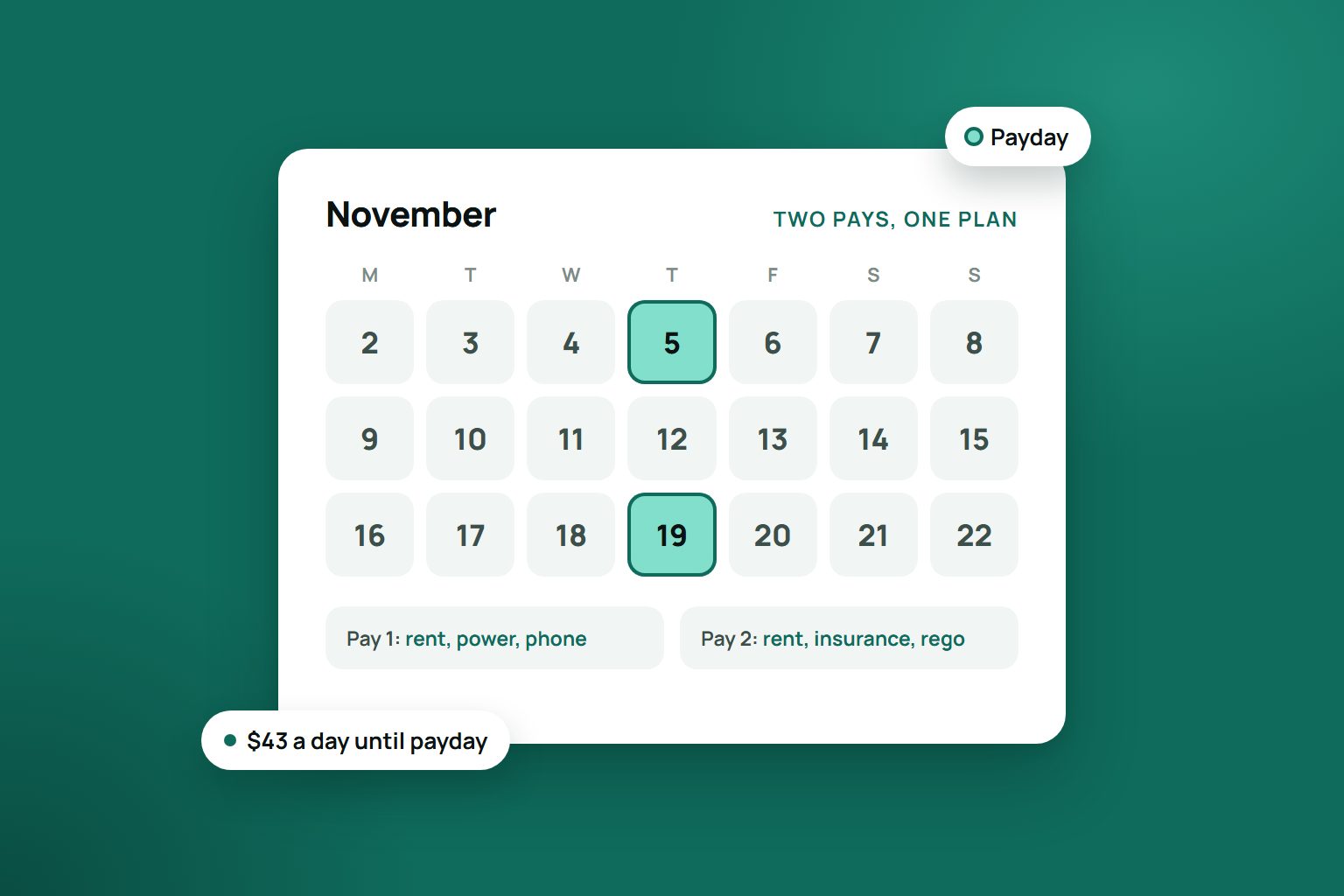
If you're paid every two weeks, most budgeting advice doesn't quite fit. It's written for a monthly salary: rent on the 1st, everything else lined up neatly behind it. But a lot of New Zealanders are paid weekly or fortnightly, and their bills don't care when payday lands.
Here's a simple way to budget on a fortnightly pay, without a spreadsheet degree.
1. Start with your payday, not the calendar month
A fortnightly pay comes 26 times a year. That's more than twice a month, which is why "half my monthly bills each pay" never quite works. The better question for each pay is: what has to be paid before the next one lands?
Write down your next few paydays, then put each bill under the pay that has to cover it. Rent, power, phone, insurance, subscriptions, car payments: each one goes against a specific payday.
2. Turn monthly and yearly bills into a "per pay" amount
For bills that don't follow your pay cycle, work out what to set aside each fortnight:
- Monthly bills: the monthly amount × 12 ÷ 26. A $130 phone bill is about $60 a fortnight.
- Yearly bills (rego, WOF, house or contents insurance): the yearly amount ÷ 26. A $400 insurance bill is about $15.40 a fortnight.
- Weekly costs (groceries, petrol): the weekly amount × 2.
Put the set-aside amounts somewhere separate if you can, so the money is there when the bill turns up. That's what people call a sinking fund.
3. Plan for the two "three-pay" months
Because 26 fortnights don't divide evenly into 12 months, most years there are two months where you get three pays instead of two. If your budget is built per pay rather than per month, you don't have to do anything clever: those months just come out ahead. Many people use the extra pay for a yearly bill, savings, or paying down a debt faster.
4. Know what's safe to spend
Once the bills for this pay and your set-asides are covered, what's left is genuinely yours to spend until the next payday. Divide it by the days until payday and you get a daily number, which is much easier to stick to than a monthly total.
Example (made up): a $1,800 fortnightly pay, $950 of bills and set-asides due before the next pay, and $250 for groceries leaves $600. With 14 days to go, that's about $43 a day.
5. Watch the long gaps
Some paydays move when they fall on a public holiday, and over Christmas and New Year there can be a long stretch before the first January pay. Check your employer's holiday pay dates early, and keep a little buffer for the gap.
How KiwiBudget helps
KiwiBudget is built around exactly this. You tell it how often you're paid, it keeps track of your bills, and its main number is what's safe to spend before your next pay. It connects read-only to the main NZ banks through Akahu, or you can add transactions yourself for free. KiwiBudget launches on iPhone and Android on 16 November 2026, and also runs on the web.
Quick answers
How many fortnightly pays are there in a year?
Usually 26. Every so often the calendar works out to 27, which is worth knowing if your salary is split into fortnightly payments.
How do I split a monthly bill across fortnightly pays?
Multiply the monthly amount by 12, then divide by 26. Set that aside every pay and the bill is always covered.
What should I do with a third pay in a month?
If your bills are planned per pay, the third pay is extra room. Common choices are a yearly bill, an emergency buffer, or extra off a debt.