How to Set a Grocery Budget in New Zealand
By KiwiBudget Team ·
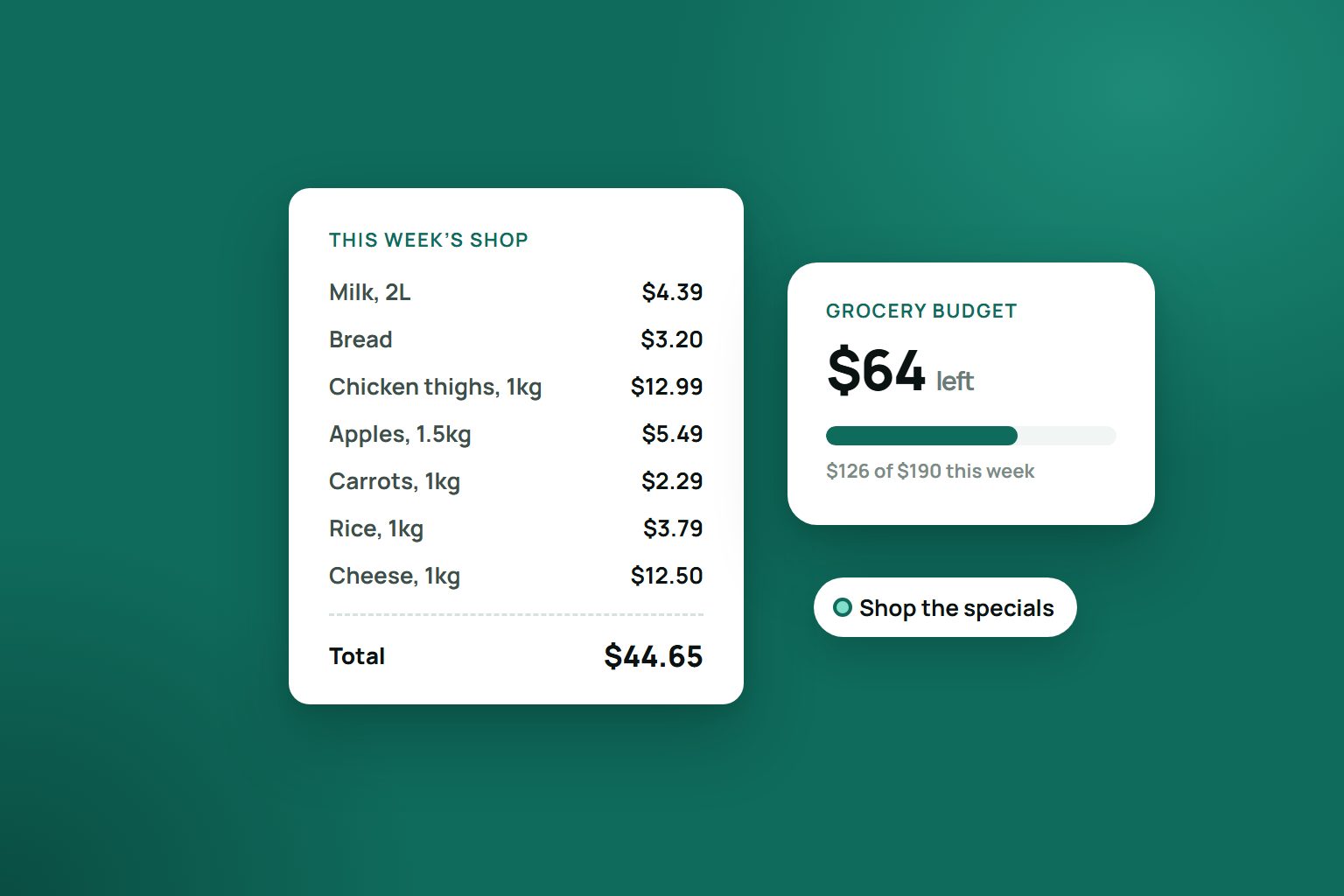
Food is one of the biggest costs in a Kiwi household budget. In Stats NZ's latest household spending survey it came second only to housing, and unlike rent it is a cost you can change week to week. Rent is fixed, power is mostly fixed, but the trolley is where the number moves. The catch is that almost nobody knows whether their weekly shop is normal, high, or quietly out of control, so it just drifts.
Here is how to set a grocery number that fits real life in New Zealand, and how to bring it down without eating beans for a fortnight.
What Kiwis actually spend on food
There is no single right number, but there are useful anchors. Stats NZ's most recent detailed household spending survey, for the year to June 2023, found:
- Food to eat at home: about $214 a week for the average household, once you add up everything from fruit, vegetables and meat to bread, milk, snacks and non-alcoholic drinks.
- All food: just under $300 a week once restaurant meals and ready-to-eat food such as takeaways were added in. That was 18.7 percent of all household spending.
- Where you live: total food spending ranged from about $269 a week in the South Island outside Canterbury to about $339 in Auckland.
Two things to keep in mind. Food prices have risen since that survey, including 2.5 percent in the year to June 2026 alone, so today's figures will be higher. And the survey's food figure leaves out things like alcohol, cleaning products and toiletries, so your supermarket total will usually be bigger than your food spend.
Treat these as a sense check, not a target. Households come in all sizes, and couples and families usually spend less per person than someone living alone, because staples get shared and bigger packs are often cheaper per kilo. How often you shop and whether you buy brand names move the number too.
Work out your own number, not the average
An average is only a starting point. Your real number comes from what you have actually been spending.
- Look back over the last two or three months. Add up every supermarket and dairy transaction, then divide by the number of weeks. That is your true baseline, not what you think you spend.
- Separate groceries from the rest. Wine, cleaning products, nappies and a birthday card all ring up at the same till. Decide whether they live in your grocery budget or somewhere else, and be consistent.
- Set your target slightly below the baseline, not miles below. If you have been spending $220, aim for $190, not $120. A budget you blow in week one teaches you nothing except that budgets do not work.
The goal is a figure you can hit most weeks. A realistic number you keep beats an ambitious one you abandon.
Where you shop matters more than you think
The banner on the door can change the total more than almost any other single habit.
- Pak'nSave is the no-frills option and is usually the cheapest for a full shop, if you can handle the barn-sized stores and pack your own bags. In Consumer NZ's latest survey (prices collected from February to April 2026 in four cities), Pak'nSave was cheapest in all four. Its 16-item basket averaged $84.38, about $5 a week less than New World and Woolworths even with a loyalty card.
- New World and Woolworths (formerly Countdown) sit higher on shelf price but run more specials and member prices, so the gap narrows if you shop to the specials rather than the sticker. Without a card it widens: in the same survey, New World shoppers without one paid the most, about $97 for the same basket.
- The local dairy and small grocers are convenient and worth having, but they tend to charge more per item. Fine for milk on the way home, expensive for a weekly shop.
If there is a Pak'nSave within reach and money is tight, doing the bulk shop there and topping up elsewhere is one of the simplest ways to cut the total without changing what you eat.
Trimming the bill without the misery
Cutting groceries does not have to mean cutting joy. A few habits do most of the work.
- Plan the week's meals before you shop. Even a rough list of five dinners stops the aimless wandering that fills a trolley with things you already own.
- Shop the specials, then build meals around them. Buy the mince or chicken that is marked down and plan from there, rather than deciding the meal first and paying full price.
- Check the unit price, not the shelf price. The per-kilo or per-litre price tells you the real deal, and New Zealand's unit pricing rules mean larger supermarkets have to show it. Bigger is often, but not always, cheaper.
- Use a loyalty scheme if you already shop there. New World's Club+ (free to join, and the replacement for Clubcard since June 2026) and Woolworths' Everyday Rewards both unlock member prices. Consumer NZ found New World shoppers without a card paid about 8 percent more on its basket, against about 1 percent more at Woolworths. Just do not let a card talk you into a store that is dearer overall: some member-only deals still cost more than Pak'nSave's everyday prices.
- Do not shop hungry, and do not shop daily. For most people, one planned shop beats five quick top-ups.
None of this is about deprivation. It is about paying less for roughly the same food.
Making the budget actually stick
A grocery budget only works if you can see it moving as the week goes on. A number you check once a month is a number you will overshoot.
The trick is knowing, at any point, how much room is left. That is hard to do in your head when the supermarket, the dairy and the weekend market all count, and when payday is fortnightly but the shop is weekly.
This is where seeing all your spending in one place helps. KiwiBudget, which launches 16 November 2026, connects read-only to your NZ bank through Akahu, New Zealand's open finance platform, and you never give KiwiBudget your banking password. Its own New Zealand merchant list files Pak'nSave, Woolworths, New World and Four Square spending as groceries for you. Set a weekly grocery budget and it shows how much of it is left, so you are checking a figure instead of adding up receipts. Bank sync starts with the $4 Sync plan. On the Free plan you can add spending by hand or upload a bank statement instead.
Key Takeaways
- Food is the second-biggest cost for the average Kiwi household, and the big cost you can change fastest, which makes it the best place to find breathing room.
- Averages are a sense check, not a target. In Stats NZ's 2023 survey the average household spent about $214 a week on food for home and just under $300 on all food, and prices have risen since. Your own spending history is the number that counts.
- Set your budget just below your real baseline, not at a level you cannot sustain.
- Where you shop moves the total, and Pak'nSave was cheapest in all four cities in Consumer NZ's 2026 survey.
- Meal planning and shopping the specials do most of the saving, without the misery.
- Track it weekly, not monthly, so you can course-correct before you overspend.
Create your KiwiBudget account before launch on 16 November 2026 and let it keep your grocery number honest.